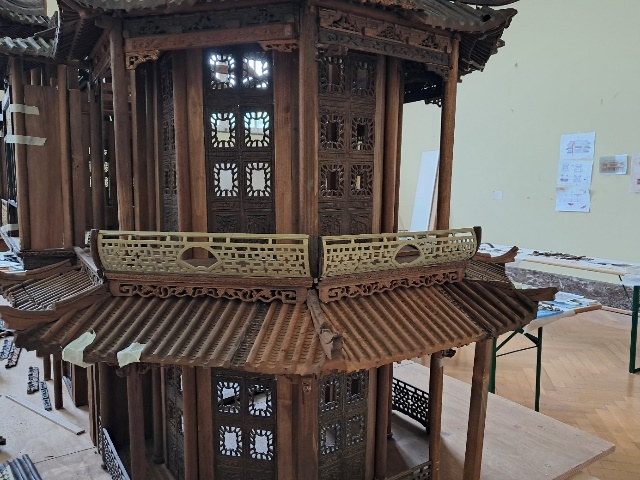
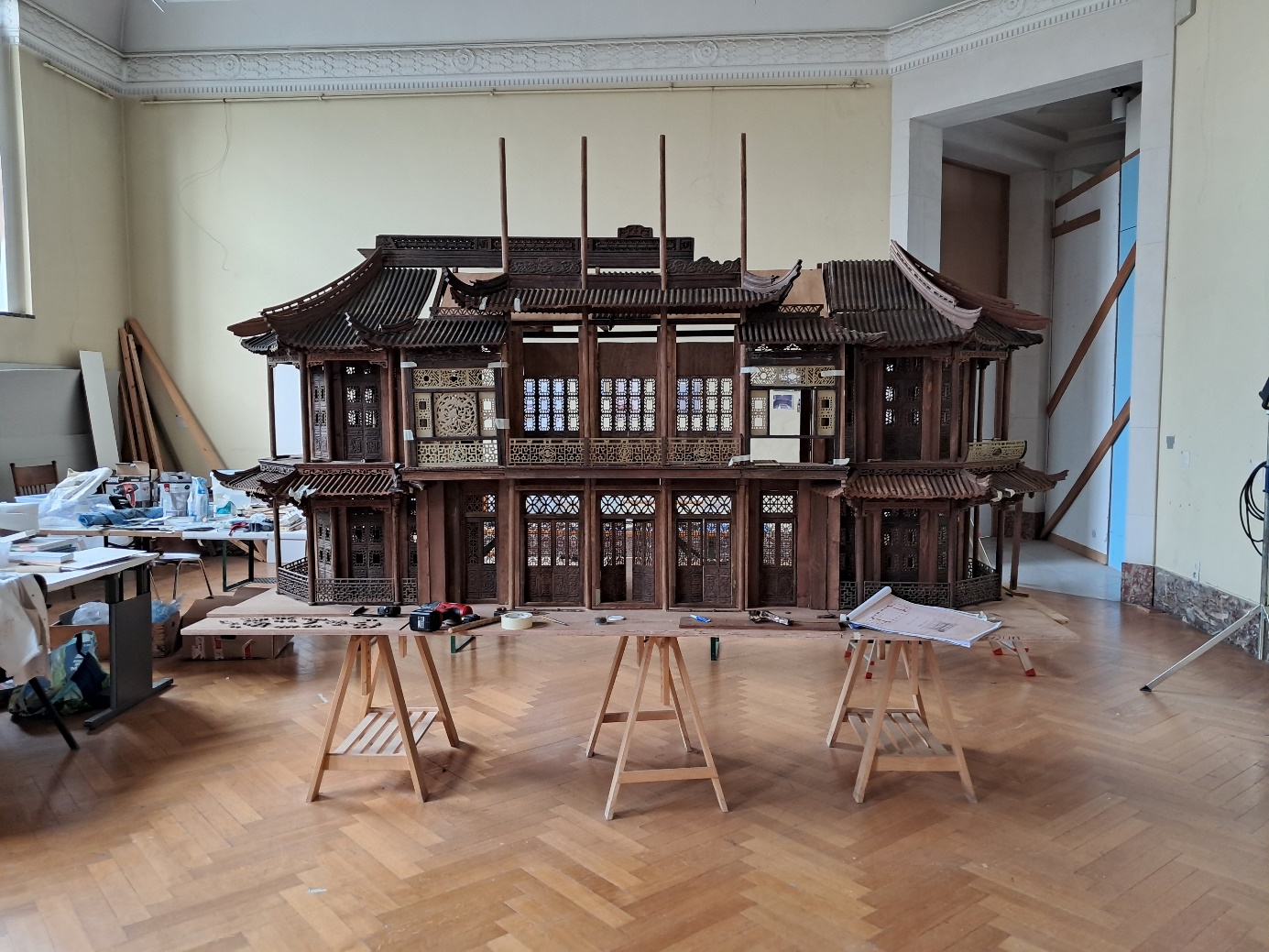
We have an appointment with Nicolas Godelet on May 28 to decipher the inscriptions on the main facade.

The photo of the model from the Shanghai Notebook is too blurry to clearly read these inscriptions, and those on the actual Chinese Palace have a different typography.
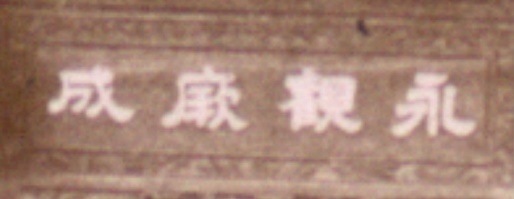

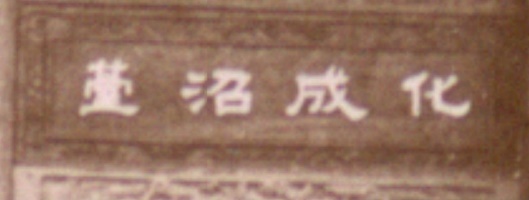
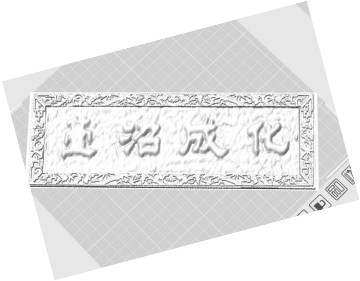
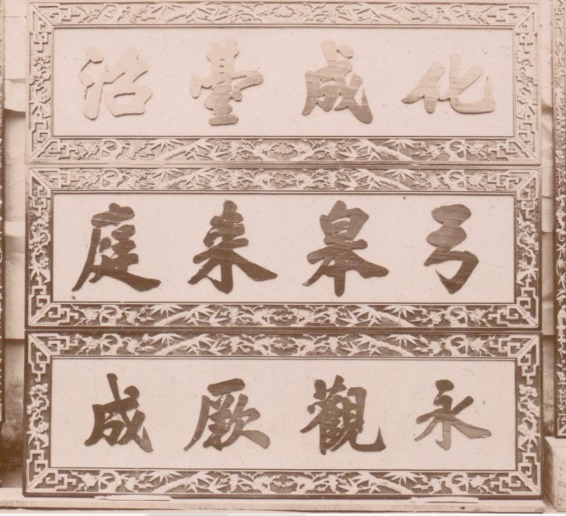
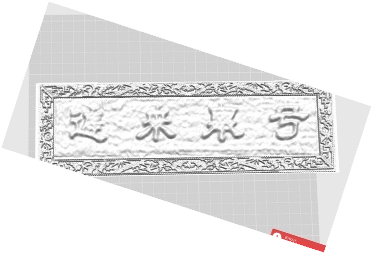

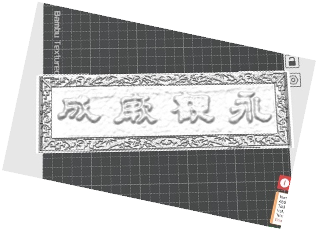
This deciphering is complex because the text refers to ancient poems that cannot be translated into a single sentence, as letters, signs, and words are also ideograms. According to Nicolas Godelet, some signs refer to prosperity, arts, music, and wishes for longevity.

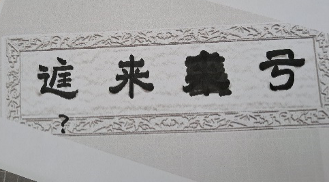
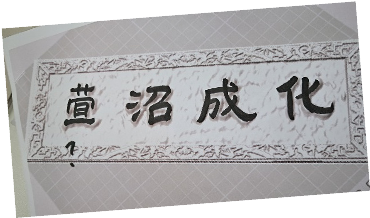

When recaliigraphing them, a doubt remains about one character. Nicolas Godelet is consulting a Chinese professor to ensure the accuracy of the transcription.
On May 30, we are completing the ridge pieces of the roof. For this purpose, we stamp the existing part into a clay mold and erase the inscriptions, as we do not know those on the missing part. We then pour resin into the clay.
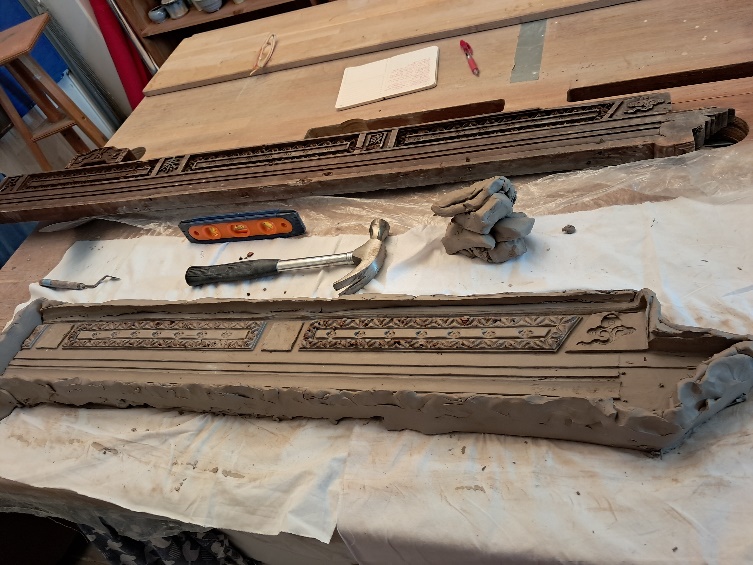
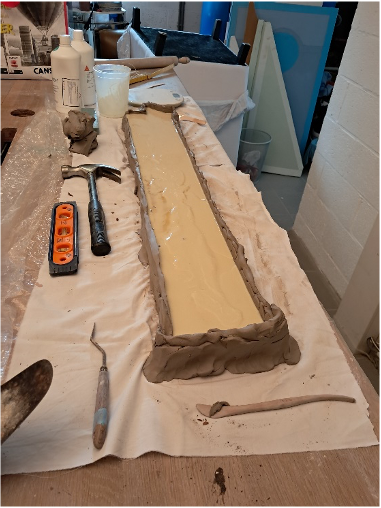
Once the resin has hardened, we remove the clay with a brush and water. Since the missing part is detailed on both the front and back, we mold two similar pieces that we will attach together.
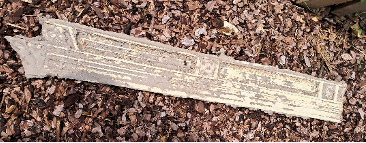
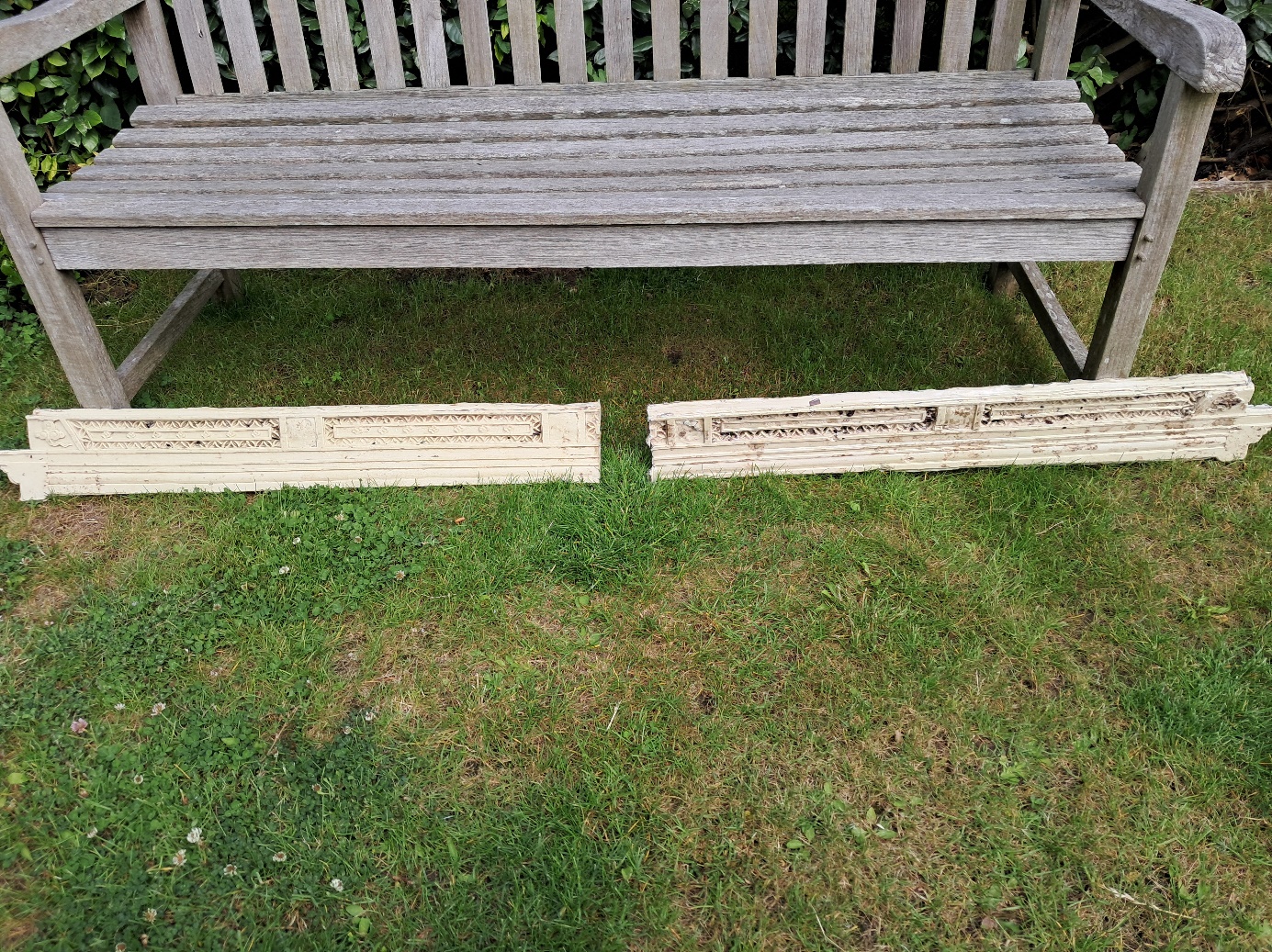
On the small side roofs of the central part of the facade, we place openwork railings that will serve as support for the central roof of the facade. We then place the small central roof of the facade.
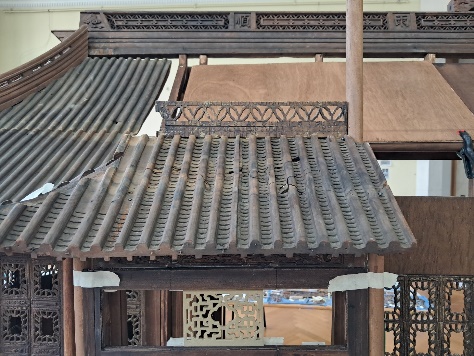
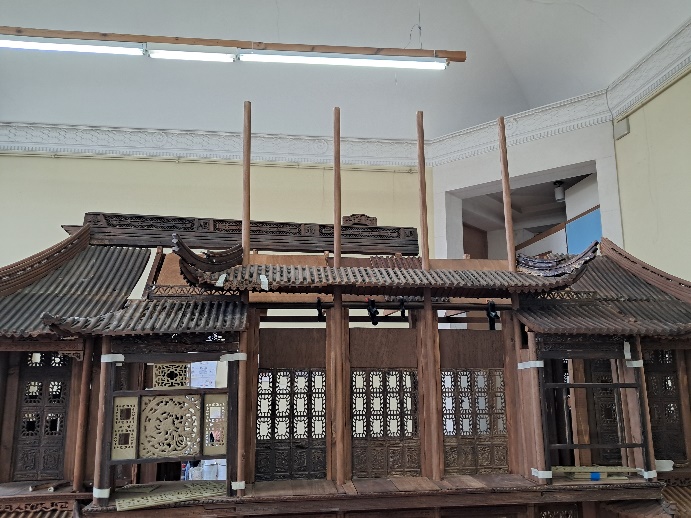
We place the solid railings and the ornamental pieces on the sides of the top of the small central facade roof, as well as the balcony railings of the central part of the model.
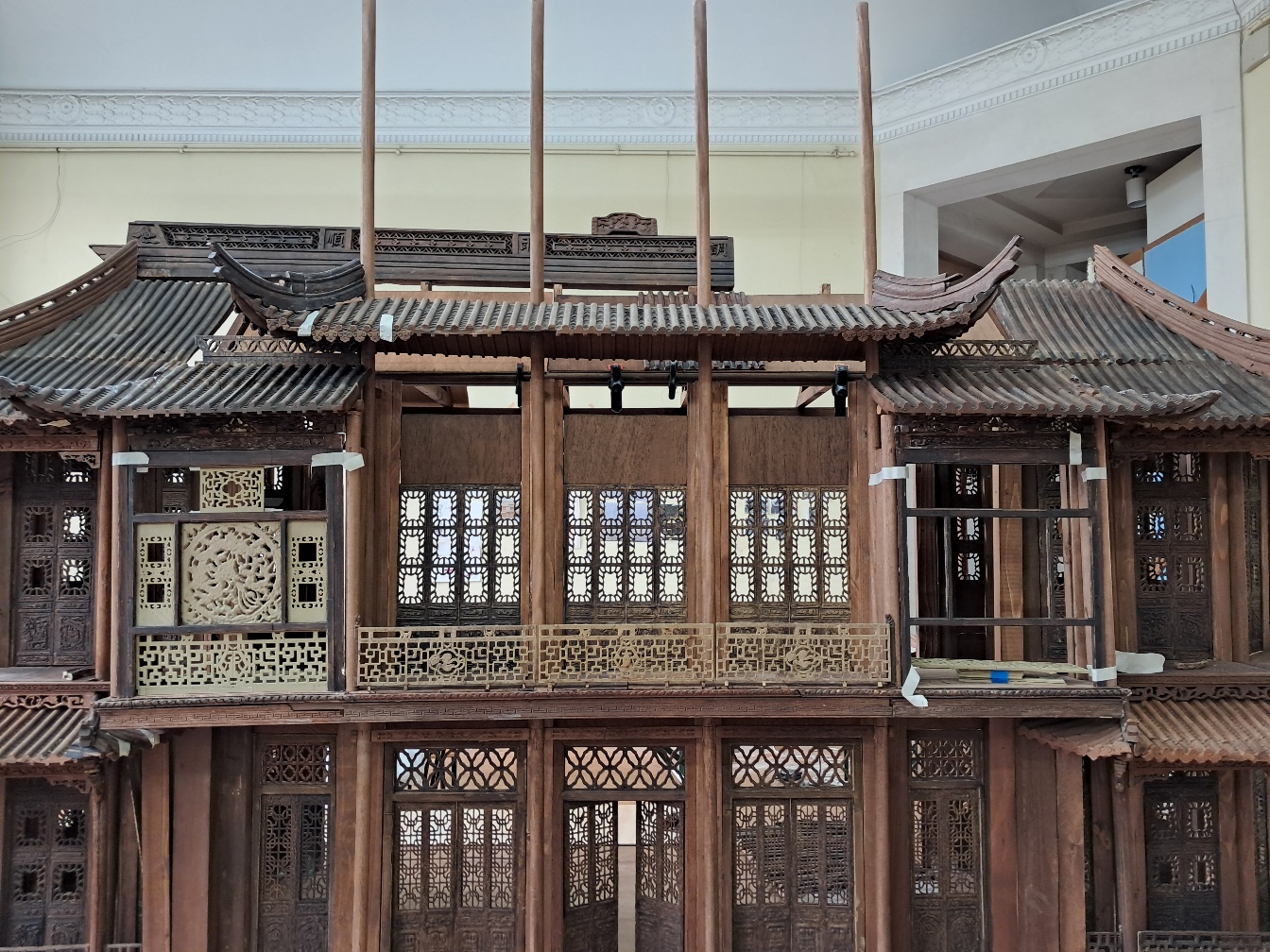
After simulating the various pieces to be placed under the small roof of the main facade, we position the pieces that appear to be correct.
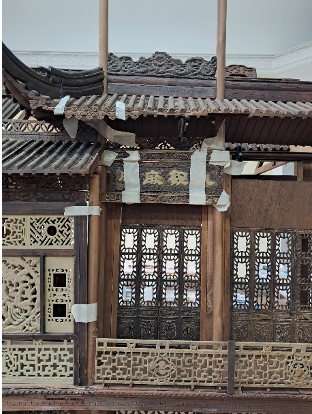
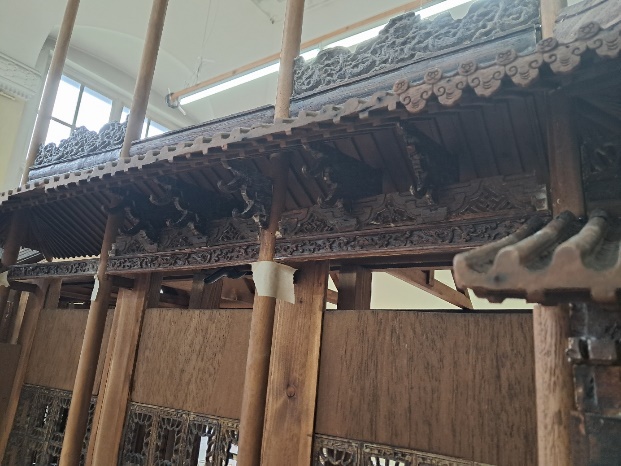
These are openwork friezes with notches into which false dogongs are positioned. They will be completed with wooden slats that will enclose the entire structure.
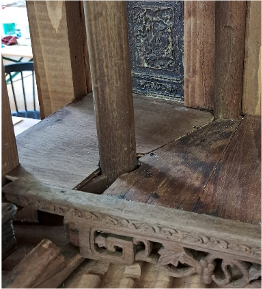
We are finishing the flooring of the first-floor balcony adjacent to the central part.
We are permanently installing the rounded first-floor balconies.